
For decades, the options for replacing missing teeth were limited to removable dentures or dental bridges. While these methods addressed the aesthetic gap, they often failed to preserve jawbone health or provide full bite functionality. Today, restorative dentistry has shifted toward a more permanent and biologically integrated solution. Dental implants have rightfully earned their reputation as the gold standard for dental implants, offering a sophisticated way to restore both the form and function of a natural smile.
Understanding the different types and materials involved in the procedure is the first step for any patient considering this restorative journey.
Common Types of Dental Implants
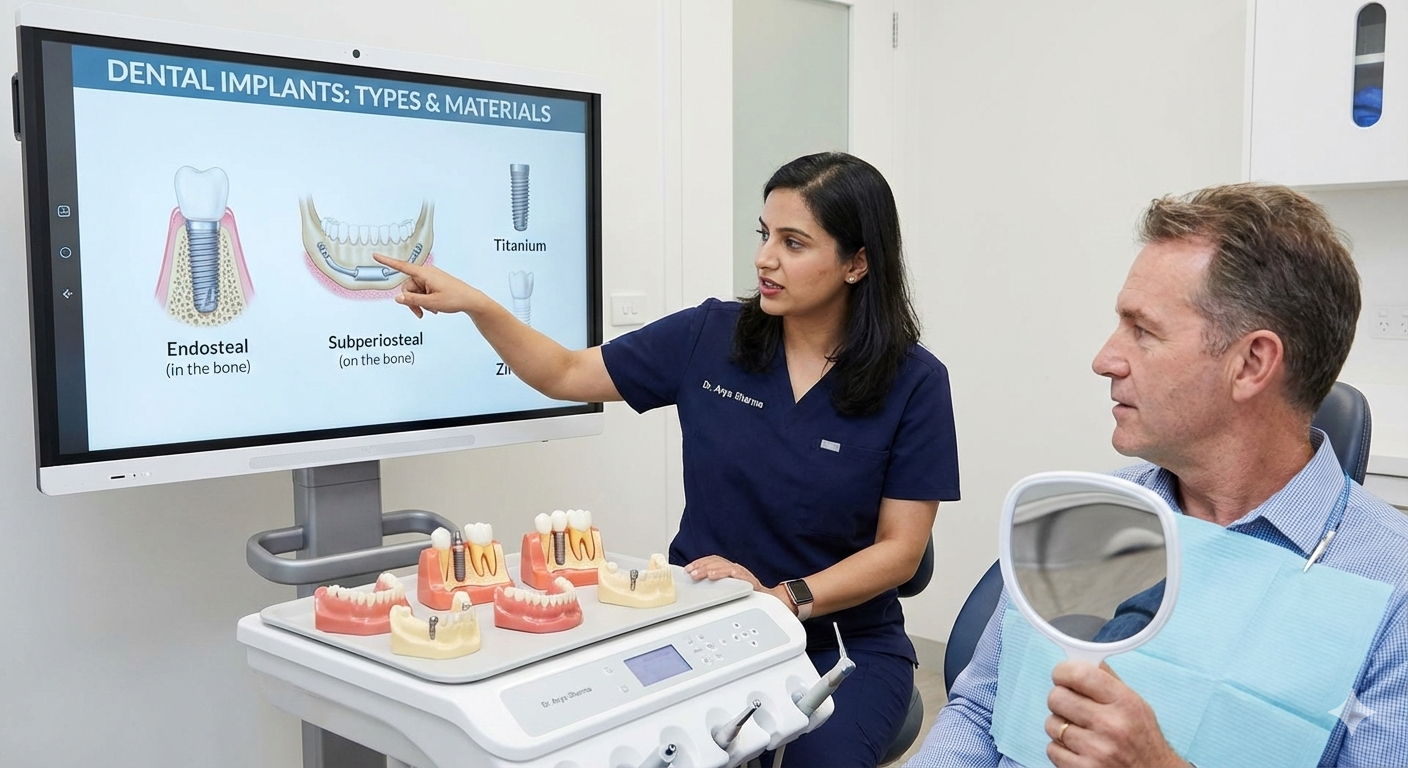
Not every patient’s jaw is the same, which is why there are different methods for anchoring an implant. The two primary types are:
- Endosteal Implants: This is the most common variety. These implants are typically shaped like small screws or cylinders and are placed directly into the jawbone. Once the surrounding tissue heals, a second procedure connects a post to the original implant to support the final crown.
- Subperiosteal Implants: For patients who do not have enough healthy natural jawbone and cannot undergo a bone augmentation procedure, subperiosteal implants are an alternative. These consist of a metal frame that is placed under the gum tissue but on or above the jawbone. The frame becomes fixed as the gums heal, with posts protruding through the gum to hold the prosthetic tooth.
In rare, complex cases involving significant bone loss in the upper jaw, surgeons may use Zygomatic implants, which are anchored in the cheekbone rather than the jaw.
Exploring Implant Materials
The success of an implant depends on “osseointegration,” a process where the bone cells grow and attach directly to the implant surface. To achieve this, the materials used must be highly biocompatible.
Titanium has been the industry standard since the 1960s. It is incredibly strong, resistant to corrosion, and has a proven track record of long-term success. Most titanium implants are actually alloys, blended with small amounts of other metals to enhance their physical properties and durability.
Zirconia is a newer, metal-free alternative. As a high-strength ceramic, zirconia is popular among patients with metal sensitivities or those who have thin gum tissue. Because zirconia is naturally white, it eliminates the risk of a dark metallic shadow showing through the gums, providing a highly aesthetic, “all-ceramic” result.
The Anatomy of the Restoration
A dental implant is more than just the screw in the bone. A complete restoration consists of three parts:
- The Implant Post: The “root” that integrates with the bone.
- The Abutment: A connector piece that sits on top of the post.
- The Crown: The custom-made prosthetic tooth that is visible in the mouth.
By selecting the right type and material, dental professionals can provide a solution that feels, looks, and functions like a natural tooth. With proper oral hygiene and regular professional maintenance, these implants can provide a lifetime of confidence and oral health.