
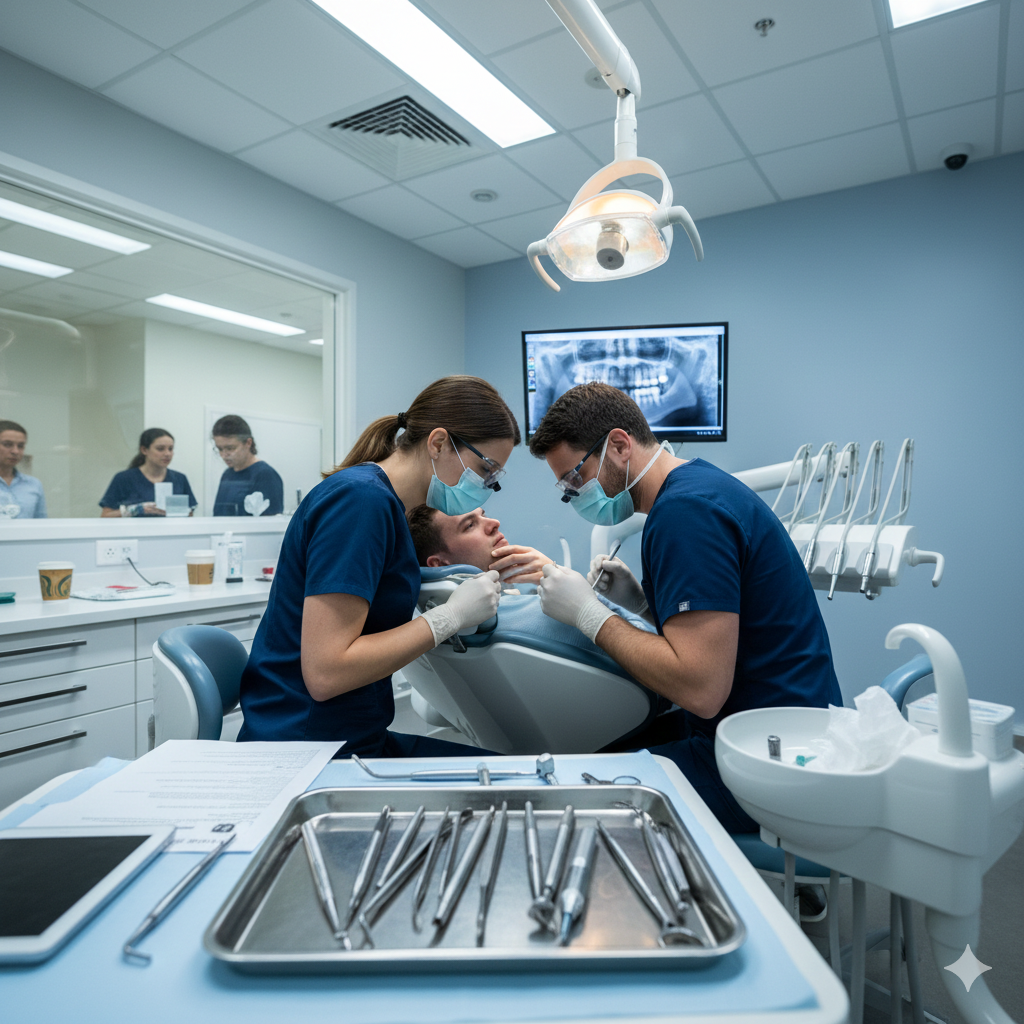
The doors of an emergency dental clinic never truly rest. While the rest of the world follows the rhythmic ticking of a standard clock, these clinics operate on the unpredictable pulse of human pain. Within these walls, time is measured not in hours, but in the seconds between a patient’s arrival and the administration of relief. Life in an emergency dental clinic is a high-stakes environment where the atmosphere is thick with a unique blend of anxiety and hope. Every person walking through the door carries a story of sudden trauma or escalating agony that could no longer be ignored.
The morning usually begins with a rapid assessment of the overnight triage list. In a dedicated emergency facility, the schedule is a living document, constantly shifting to accommodate the most critical cases. A cracked molar from a breakfast mishap might be the first arrival, followed quickly by a teenager who took a hockey puck to the jaw. The staff—dentists, assistants, and receptionists—operate with a synchronized fluidity. They understand that for the person in the waiting room, every minute feels like an eternity.
The clinical environment is designed for maximum efficiency. Every instrument is positioned for immediate access because, in an emergency, hesitation is not an option. The air often carries the faint, sterile scent of clove oil and high-grade disinfectants, a sensory backdrop to the quiet intensity of the work. Practitioners here must possess a rare combination of technical mastery and emotional intelligence. They are often meeting patients at their absolute worst—exhausted, fearful, and often in the throes of debilitating discomfort.
Central to this daily drama is the necessity for urgency and precision, especially in procedures like wisdom tooth removal. When an impacted wisdom tooth becomes infected or causes an abscess, the pain is not merely a nuisance; it is a systemic crisis. These cases often present as late-night emergencies when the pressure against the jawbone becomes unbearable. The surgeon must work quickly to decompress the area while maintaining the surgical accuracy required to protect surrounding nerves and sinuses. There is no room for error when the patient’s immediate quality of life hangs in the balance.
As the afternoon progresses, the pace rarely slackens. Emergency dentistry is the frontline of oral healthcare. Unlike general practice, where appointments are booked weeks in advance for routine cleanings, the emergency clinic deals with the “now.” This requires a constant state of readiness. One operatory is always kept “hot”—fully sterilized and ready for a walk-in trauma case. The staff eats lunch in shifts, often interrupted by the chime of the front door or the urgent ring of the telephone.
Communication in this setting is clipped and purposeful. Dentists and assistants communicate through a shorthand developed over years of shared crises. A single nod or a specific look toward a tray can signal the need for a different local anesthetic or a specialised surgical bur. This unspoken language reduces the noise in the room, helping to keep the patient calm. For the patient, the sound of the high-speed handpiece can be a source of intense dread. The team works hard to offset this with a soothing presence, explaining each step of the intervention to demystify the process.
Mid-day often brings the “deferred pain” cases. These are patients who felt a twinge days ago but hoped it would disappear. By the time they reach the emergency clinic, the issue has evolved into a full-scale infection. Abscesses are common here. Managing these requires not just dental skill, but a deep understanding of pharmacology. The dentist must decide whether to drain the infection immediately or stabilize the patient with antibiotics first. These decisions are made under pressure, weighing the patient’s medical history against the severity of the oral pathology.
The financial and emotional stress of the patients is another hurdle the staff navigates daily. Dental emergencies are rarely budgeted for. The front desk staff often acts as counselors, helping patients understand their insurance coverage or financing options while they are still reeling from physical pain. It is a delicate balance of business and empathy. A patient who is crying from a toothache is rarely in a position to discuss complex payment structures, yet these logistics are a necessary part of keeping the clinic operational.
In the late afternoon, the clinic often sees an influx of pediatric emergencies. Children falling on playgrounds or bumping their mouths on coffee tables create a different kind of tension. Treating a child in pain requires a transformation of the clinical space. The “urgency and precision” mentioned earlier must be masked behind a mask of playfulness and extreme patience. This is why dental SEO will often focus on searches for “kids emergency dentist”. Saving a permanent tooth that has been knocked out is a race against biology; the “golden hour” for replanting a tooth is narrow. Every second the tooth spends outside the socket reduces the chance of long-term success.
As evening approaches, the lighting in the clinic seems to sharpen. The “after-hours” vibe takes hold. The street outside might grow quiet, but inside, the intensity remains. This is when the most severe wisdom tooth complications or post-surgical bleeds often appear. The surgeons who specialize in these areas are accustomed to the late-night call. They understand that a wisdom tooth that has turned “angry” can cause swelling that threatens the airway, making their intervention literally life-saving.
The technical demands of the job are immense. Emergency dentists must be proficient in endodontics, oral surgery, and restorative dentistry all at once. They might jump from a complex root canal to an extraction, then to splinting a fractured jaw. This variety keeps the mind sharp but the body weary. By the end of a twelve-hour shift, the physical toll of leaning over dental chairs is evident in the stiff backs and tired eyes of the practitioners.
Yet, there is a profound sense of satisfaction unique to this field. In a general clinic, results are often seen over months of treatment plans. In an emergency clinic, the result is often instantaneous. A patient who arrives doubled over in pain leaves the chair with a look of immense relief. That transition—from agony to comfort—is the fuel that drives the staff. They are the “ER” of the dental world, providing a safety net for the community.
The day concludes not with a hard stop, but with a transition. The final patients are stabilized, prescriptions are written, and follow-up instructions are painstakingly explained. The instruments are sent for a final round of sterilization, and the digital charts are updated. Even as the lights dim, there is a lingering readiness. The emergency line remains active, diverted to a mobile phone or a call center, ensuring that the next person facing a midnight dental crisis will not be alone. Life in an emergency dental clinic is a testament to human resilience and the dedicated professionals who stand ready to restore a smile when it is most broken.