
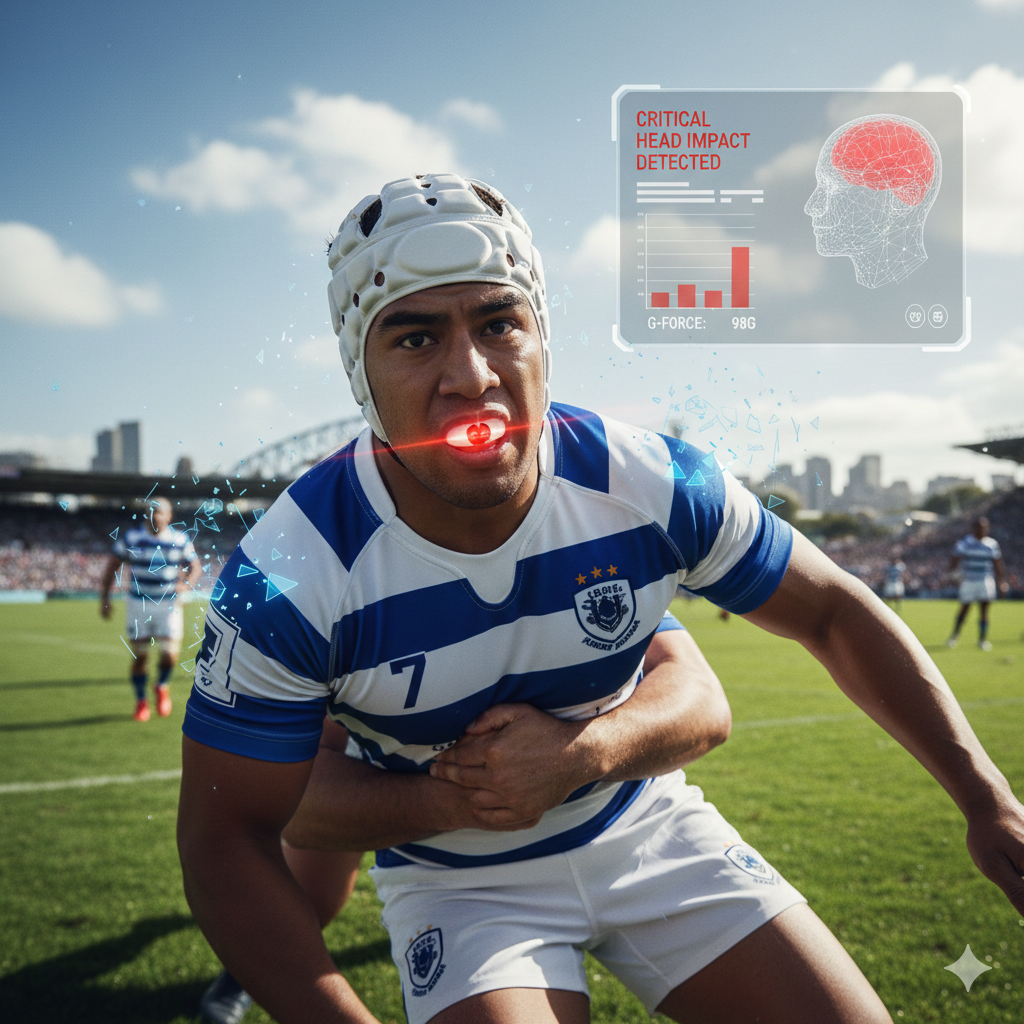
Rugby is a sport defined by its physicality, where high-speed collisions and thunderous tackles are woven into the fabric of the game. For decades, players accepted the risk of injury as an inherent part of the pursuit. However, as our understanding of traumatic brain injuries (TBI) and sub-concussive impacts evolves, the sport is undergoing a digital transformation. The introduction of the smart mouthguard is perhaps the most significant leap forward in player welfare, acting as a silent sentinel that flags head impacts in real-time. This technology does not just protect teeth; it provides a data-driven window into the brain’s health. While protecting your smile is a lifelong priority—and wearing a mouthguard today might save you a year of metal braces later—these advanced devices are now doing much more than preventing orthodontic trauma.
The Evolution of Pitch-Side Care
The traditional method for identifying concussions in rugby relied heavily on the “eye test” and player self-reporting. Medics watched for stumbles, glazed expressions, or loss of consciousness. Unfortunately, many dangerous impacts do not result in immediate, visible symptoms. Sub-concussive blows—hits that don’t cause a blackout but still rattle the brain—can accumulate over a season, leading to long-term neurological decline.
Smart mouthguards bridge this diagnostic gap. These devices are embedded with high-frequency accelerometers and gyroscopes. They measure the exact force, direction, and rotational acceleration of every hit a player takes. When a player sustains a blow that exceeds a specific G-force threshold, an alert is sent instantly to the medical staff’s tablet on the sidelines. This removes the guesswork from the Head Injury Assessment (HIA) process. Instead of waiting for a player to “feel dizzy,” the data dictates when a player must be removed for evaluation.
Engineering the Smart Shield
Creating a piece of technology that survives the mouth of a professional rugby player is a feat of engineering. The electronics must be miniaturized to fit within a standard-sized dental guard without compromising comfort or breathing. Most professional-grade smart mouthguards are custom-fitted to the player’s teeth. This ensures the sensors remain tightly coupled with the skull, providing the most accurate data possible.
The sensors record data at thousands of samples per second. This precision allows researchers to distinguish between a “clean” tackle and a “whiplash” event where the head snaps back without direct contact. By capturing the kinematics of the head, teams can build a “load profile” for every athlete. This profile tracks the cumulative impact over weeks and months, allowing coaches to rest players who have reached a dangerous threshold of “brain fatigue,” even if they haven’t suffered a diagnosed concussion.
Changing the Culture of the Game
Rugby culture has long celebrated the “hard man” persona—the player who gets up after a massive hit and keeps running. Smart mouthguards are dismantling this dangerous narrative. When the data shows a 60G impact, the decision to remove the player is no longer a debate between the athlete and the coach; it is a medical necessity backed by hard evidence.
This technology is also influencing how players train. In many elite leagues, smart mouthguards are worn during practice sessions. If the data shows that certain tackling drills are resulting in high-force head movements, coaches can modify the technique. The goal is to reduce the “total head load” throughout the year. By identifying which players are more prone to high-impact collisions, specialized coaching can be provided to improve their body positioning, effectively using technology to teach a safer way to play the game.
Beyond the Professional Level
While the spotlight is currently on international teams like the All Blacks or the Wallabies, the ultimate goal for smart mouthguard technology is the grassroots level. Junior rugby and amateur clubs often lack the sophisticated medical teams found in the professional tiers. In these environments, an affordable smart mouthguard could serve as the primary safety officer.
For parents of young players, the anxiety regarding “hidden” injuries is a significant barrier to participation. If a mouthguard can sync to a smartphone and tell a parent or volunteer coach that a child needs to sit out the rest of the game, the safety of youth sports increases exponentially. Furthermore, keeping teeth aligned and intact remains a primary function. Protecting the jaw from impact prevents the need for extensive corrective work, as maintaining a healthy bite now prevents the complications that require orthodontic intervention in the future.
The Data Revolution in Player Welfare
The data collected by thousands of players across various leagues is currently being fed into global databases. This “big data” approach is helping scientists understand the specific thresholds of human tolerance for head impacts. It allows for the refinement of world rugby laws. For example, if data consistently shows that certain types of “double tackles” result in higher G-forces, governing bodies can move to ban or penalize those specific maneuvers.
Smart mouthguards are also helping to dispel myths about “concussion-proof” helmets or gear. They prove that the most effective way to protect the brain is through impact management and technique, not just padding. The device serves as a constant reminder that the most important part of a rugby player’s equipment is the one they can’t see.
Precision and Prevention
The precision of these devices is remarkable. They can detect the difference between a player jumping and landing hard versus a shoulder-to-head collision. This level of granularity ensures that games aren’t constantly interrupted by “false positives.” The technology is designed to be a silent partner, only intervening when the risk to the player’s long-term health is genuine.
By integrating biosensors into a standard piece of protective equipment, rugby is leading the way in sports science. The mouthguard, once a simple piece of molded plastic designed to save a trip to the dentist, has become a sophisticated diagnostic tool. It represents a commitment to the longevity of the players and the survival of the sport.
A New Standard for Safety
In the coming years, wearing a smart mouthguard will likely become mandatory at all levels of contact sport. The shift from reactive treatment to proactive prevention is the only way to safeguard the future of rugby. Players are now faster, stronger, and more powerful than ever before, which means the collisions are getting heavier. Technology must keep pace with the physical evolution of the athletes.
The smart mouthguard is a testament to the fact that we can enjoy the thrill and physicality of rugby while prioritizing the neurological health of those who play it. It provides peace of mind for the players, clarity for the medics, and a wealth of information for the scientists working to make sports safer for everyone. Whether it is preventing a concussion or ensuring that a player doesn’t end up needing years of dental correction due to a preventable impact, the investment in high-quality oral protection is the smartest move an athlete can make.