
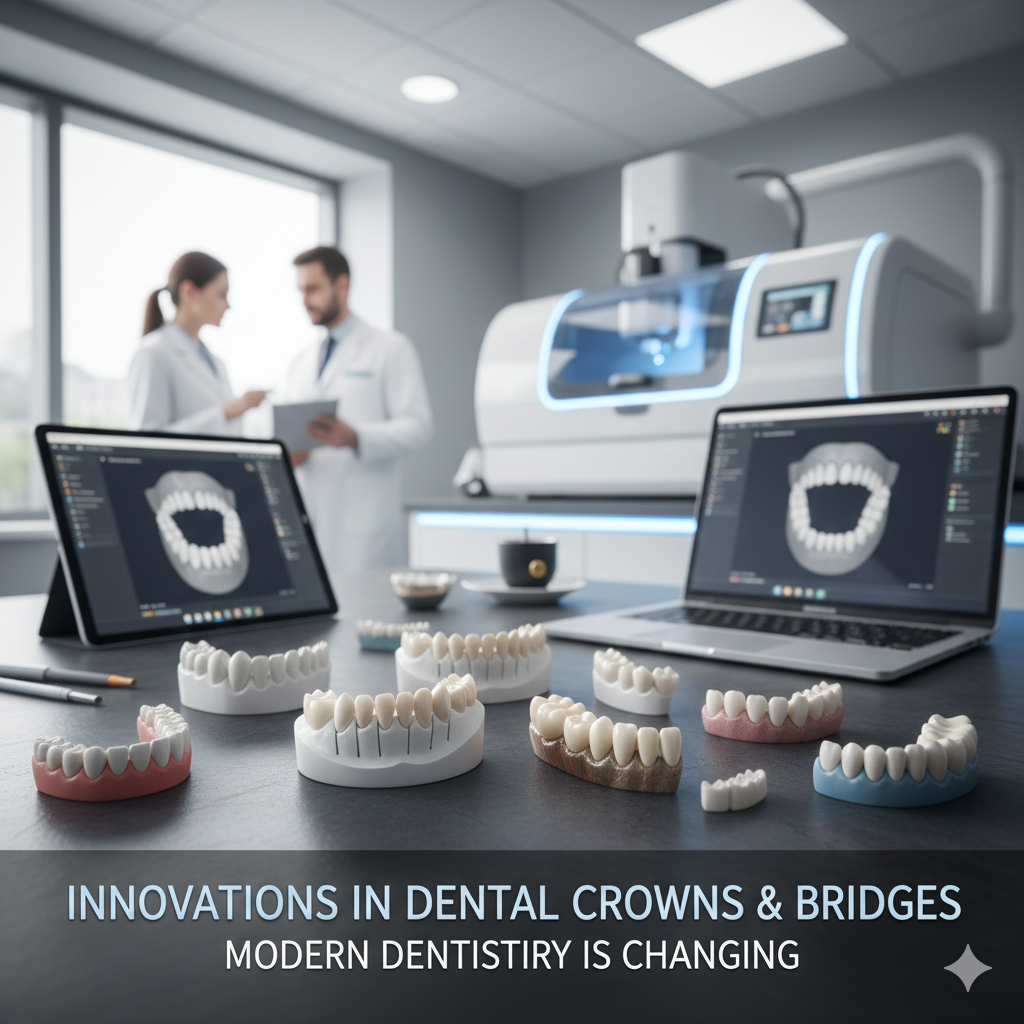
The dental industry is currently undergoing a monumental shift. For decades, restorative procedures relied on manual craftsmanship and materials that, while functional, often lacked the vitality of natural teeth. Today, the landscape is different. Innovations in dental crowns and bridges are streamlining workflows, enhancing aesthetic outcomes, and prioritizing patient comfort. These advancements are not merely incremental; they represent a fundamental change in how clinicians approach tooth repair and replacement.
Modern restorative dentistry focuses on two primary goals: longevity and lifelike appearance. When a tooth suffers from extensive decay, a fracture, or the aftermath of a root canal, it requires a robust solution. A dental crown is often the gold standard, as it is used to cover and protect a damaged tooth while restoring its original shape and size. As technology evolves, the methods used to create these protectors are becoming increasingly sophisticated.
The Digital Revolution: CAD/CAM Technology
The most significant driver of change in modern restorative dentistry is Computer-Aided Design and Computer-Aided Manufacturing (CAD/CAM). In the traditional workflow, patients underwent a multi-week process. This involved messy silicone impressions, the placement of a temporary acrylic crown, and a long wait while a laboratory technician hand-layered porcelain.
Digital dentistry has eliminated much of this friction. Intraoral scanners now capture high-definition 3D images of the mouth in seconds. These digital impressions are far more accurate than traditional molds, which can shrink or distort. Once the digital map is rendered, dentists use specialized software to design the restoration with micron-level precision.
The manufacturing phase is equally impressive. In-office milling machines can carve a crown from a solid block of ceramic or zirconia in under an hour. This “same-day” dentistry model is a major innovation. It reduces the need for multiple local anesthetic injections and eliminates the discomfort of wearing a temporary crown, which frequently dislodges or leaks.
Material Science: The Rise of Zirconia and Lithium Disilicate
Historically, patients chose between the strength of metal and the beauty of porcelain. Porcelain-fused-to-metal (PFM) crowns were the industry standard for years. However, these often left a dark grey line at the gum tissue as the metal substructure became visible over time.
Modern material science has birthed “all-ceramic” options that rival the strength of metal. Zirconia is perhaps the most notable. Initially, zirconia was criticized for being too “opaque” or chalky in appearance. Recent innovations have produced “translucent zirconia,” which mimics the light-reflecting properties of natural enamel while maintaining immense fracture toughness. This makes it ideal for posterior teeth, which endure heavy chewing forces.
For front teeth, lithium disilicate (often known by the brand name E.max) has become the material of choice. It offers unparalleled translucency and can be bonded directly to the tooth structure. This bonding process creates a monolithic unit, reinforcing the remaining natural tooth and allowing for more conservative preparations. Dentists no longer need to remove as much healthy tooth structure to create a stable foundation.
Advanced Bridging Techniques and Implant Integration
While crowns address individual teeth, bridges solve the problem of missing gaps. Traditional bridges require the “shaving down” of healthy adjacent teeth to act as anchors. While effective, this process involves compromising healthy enamel.
Innovations in bridge design now emphasize “minimal intervention.” Fiber-reinforced composite bridges and Maryland bridges (which use “wings” bonded to the back of teeth) are becoming more durable thanks to improved adhesive chemistry. Furthermore, the integration of crowns and bridges with dental implants has revolutionized stability. An implant-supported bridge does not rely on neighboring teeth at all; instead, it anchors directly into the jawbone. This prevents bone resorption and protects the integrity of the entire dental arch.
3D Printing and Artificial Intelligence
Beyond milling, 3D printing is making waves in the dental lab. While milling is a subtractive process (carving away material), 3D printing is additive. This allows for even more complex geometries and less material waste. Currently, 3D printing is widely used for temporary crowns and surgical guides, but the industry is moving closer to permanent 3D-printed ceramic restorations.
Artificial Intelligence (AI) is also assisting in the design phase. AI algorithms analyze thousands of tooth shapes to suggest the most efficient and aesthetic crown design for a specific patient’s bite. This reduces human error and ensures that the “occlusion” (how the teeth meet) is near-perfect, preventing future jaw pain or crown fractures.
Enhanced Aesthetics and Bio-Compatibility
Modern crowns are no longer “one size fits all” in terms of color. Shade-matching technology now uses spectrophotometers to analyze the exact hue, value, and chroma of a patient’s surrounding teeth. Laboratory ceramists use internal staining techniques to mimic the subtle imperfections of natural teeth, such as craze lines or white spots, ensuring the restoration is invisible to the naked eye.
Biocompatibility is another area of rapid growth. Modern ceramics are highly “biomimetic,” meaning they behave like natural tooth tissue. They expand and contract at similar rates to enamel when exposed to hot or cold temperatures. This reduces sensitivity and prevents the development of micro-fractures in the underlying tooth. Furthermore, these materials are gentler on the opposing teeth, whereas older porcelains were often abrasive and caused premature wear on the natural teeth they bit against.
The Patient Experience: Comfort and Precision
The transition to digital workflows has fundamentally improved the patient experience. The elimination of “goopy” impression materials is a relief for patients with strong gag reflexes. Because the digital designs are so precise, the “fit” of the final crown or bridge usually requires minimal adjustment. This means less time spent in the dental chair and a much lower risk of post-operative complications.
Furthermore, laser dentistry is now being used to contour the gum tissue around a new crown. Lasers provide a bloodless, sterile environment that heals significantly faster than traditional scalpel techniques. This ensures that the margin of the crown sits perfectly against the gum line, preventing bacteria from seeping underneath and causing recurrent decay.
The Future of Restorative Care
As we look forward, the trend toward “smart” restorations is emerging. Researchers are exploring the use of bioactive materials that can release fluoride or calcium over time to remineralize the surrounding tooth structure. There is also potential for embedded sensors that could monitor for signs of infection or excessive grinding (bruxism) and alert the dentist via a mobile app.
The shift in dentistry is clear: it is moving away from reactive “drilling and filling” toward proactive, precision-engineered restoration. By combining the artistry of traditional dentistry with the speed and accuracy of digital technology, modern crowns and bridges are more durable, beautiful, and accessible than ever before. For the patient, this means a healthier smile that feels natural and lasts for decades. The era of compromise in dental restoration is officially over.